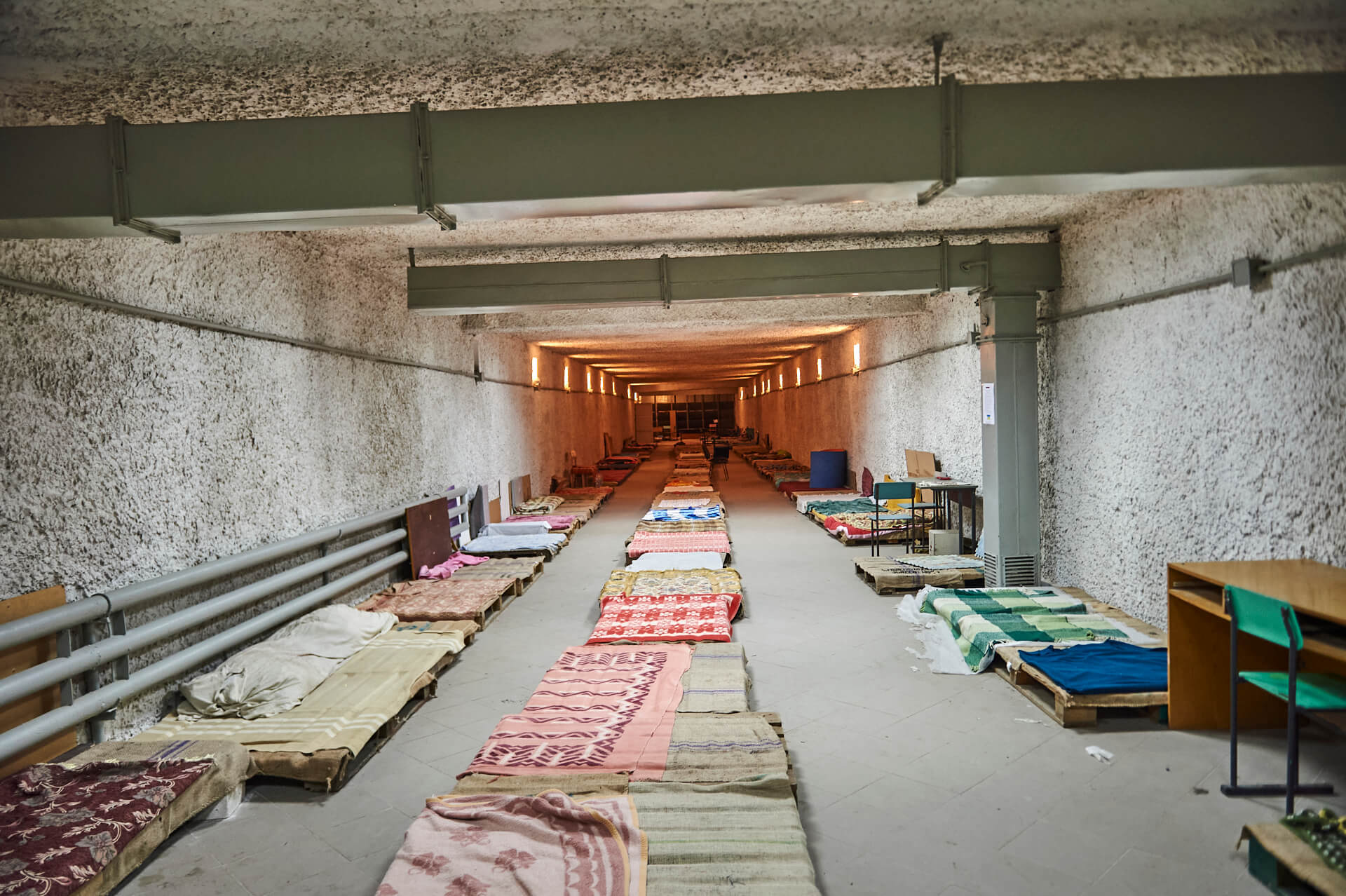
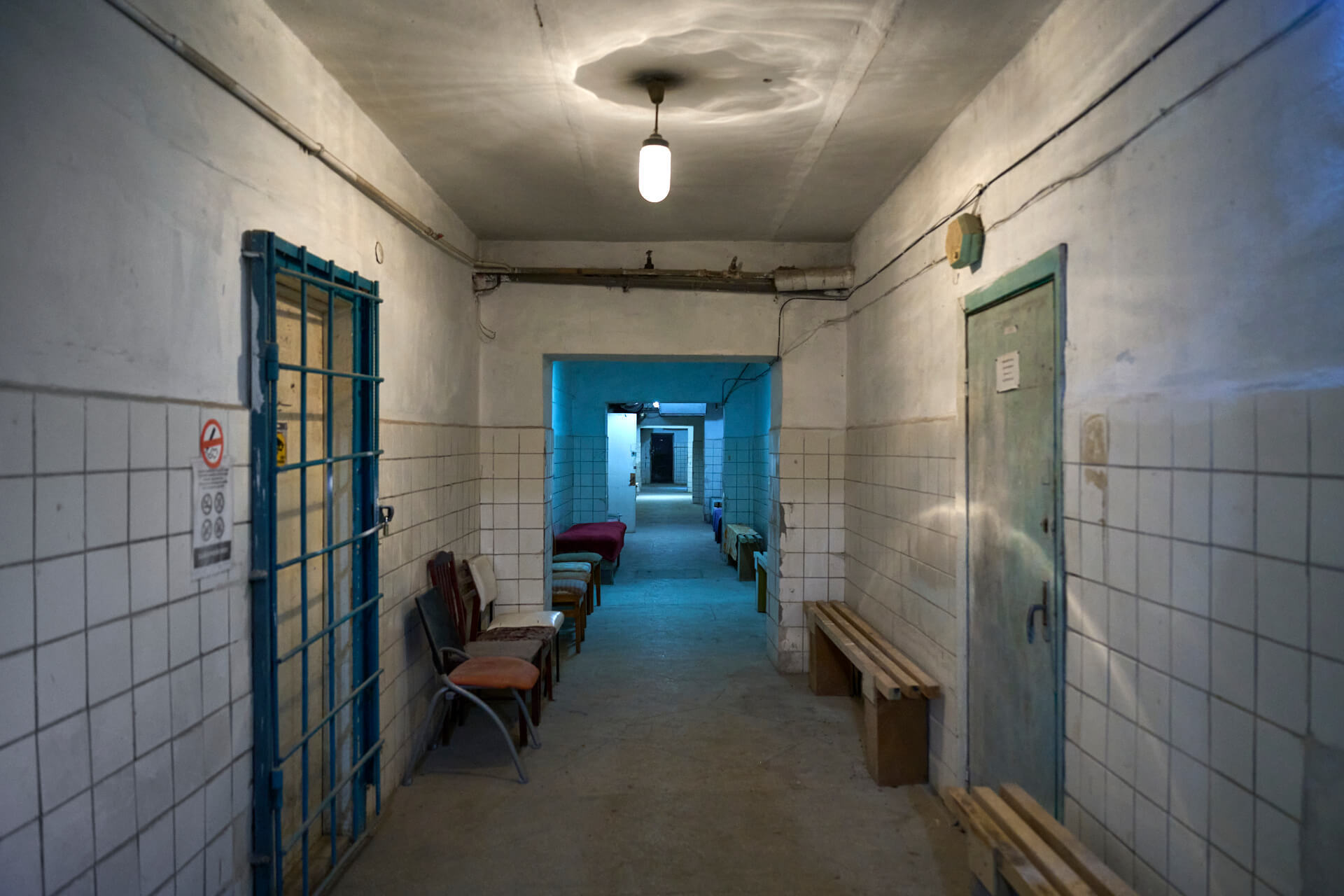
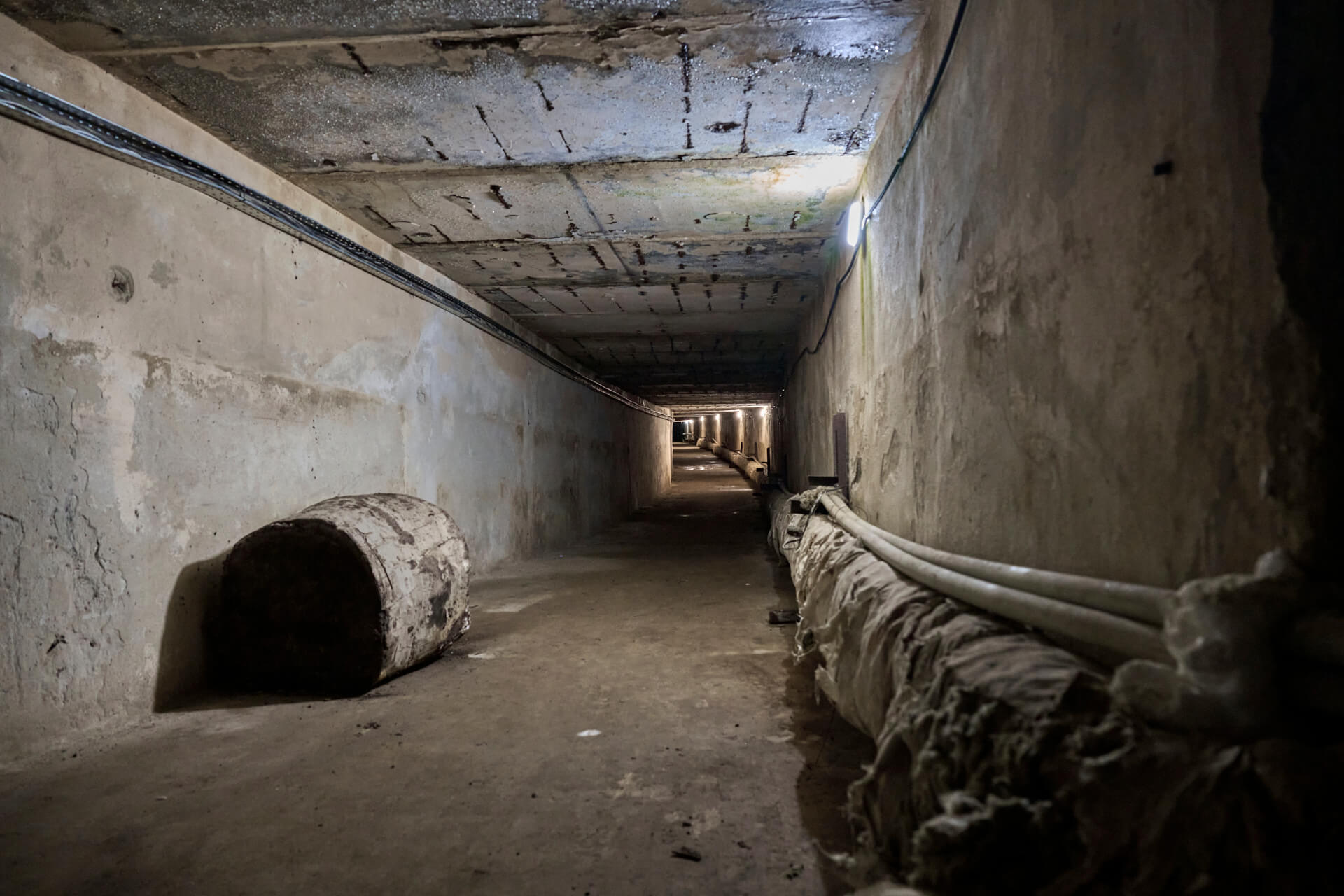
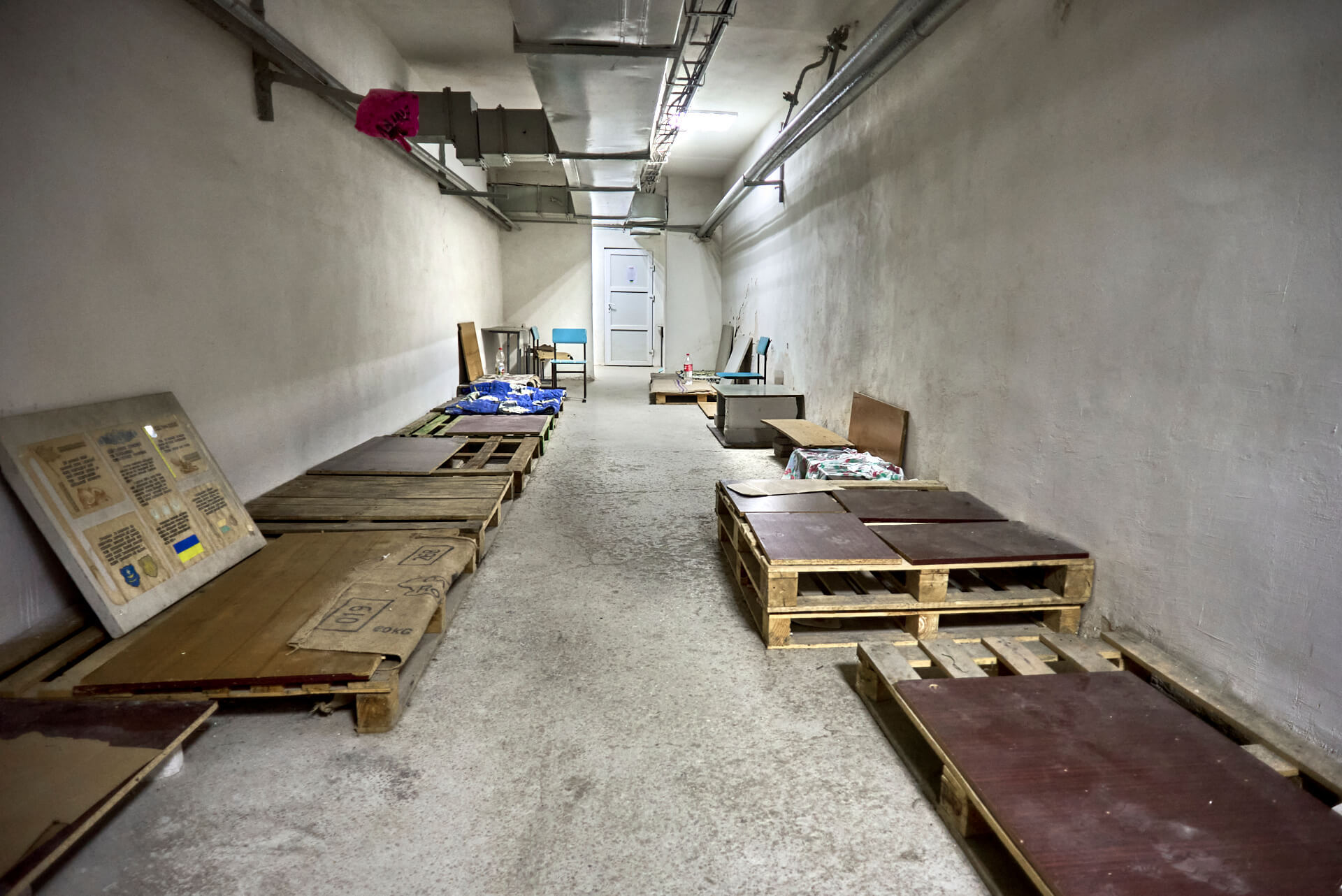
A SIMPLE SHELTER IS THE MOST BASIC FORM OF PROTECTION: A BASEMENT, A CELLAR, AN UNDERGROUND GARAGE.
IN UKRAINE, THESE DUSTED-OFF SPACES HAVE BECOME PART OF A NEW WARTIME REALITY.
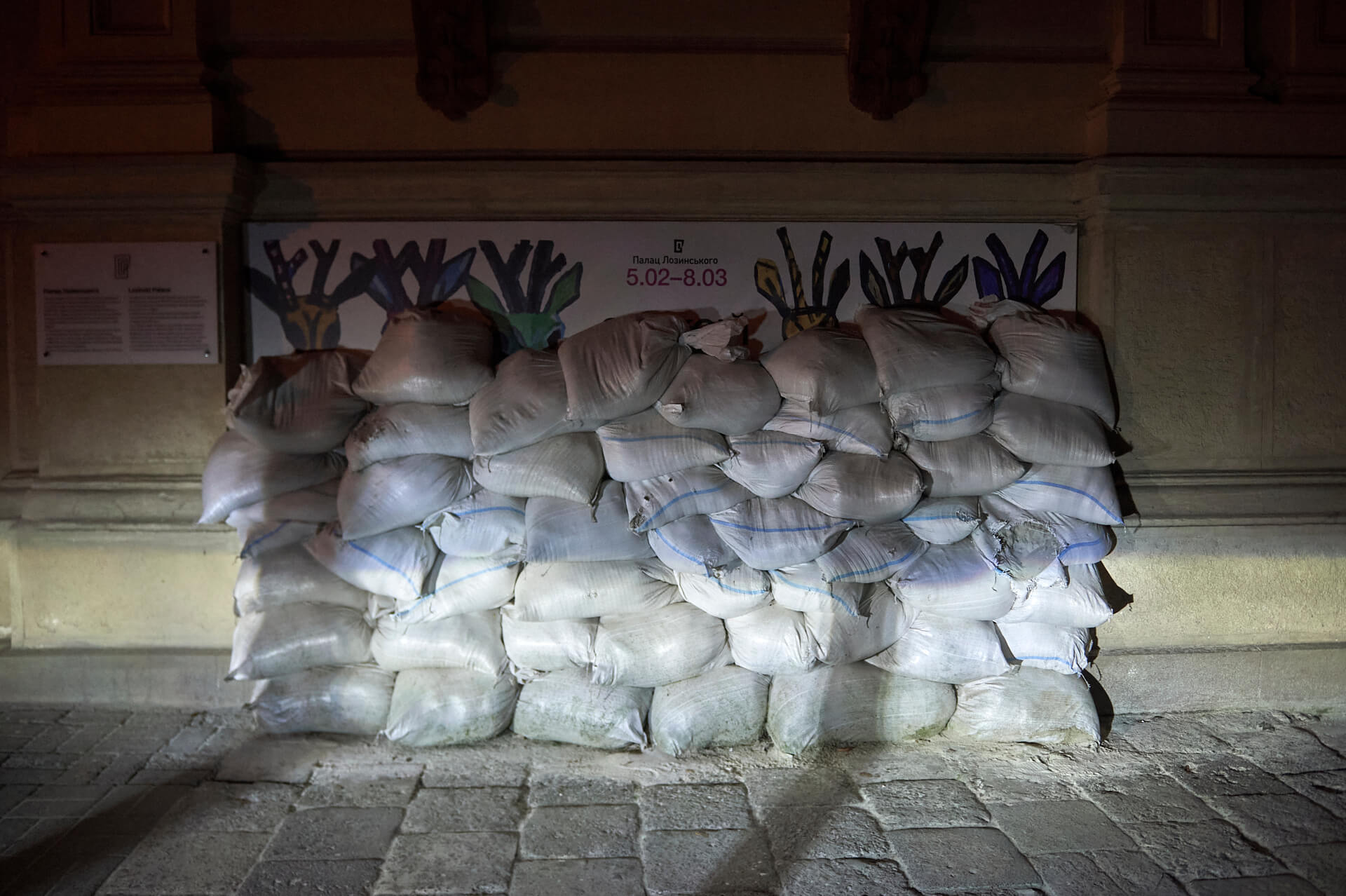
PHOTOGRAPHS FROM THIS SERIES WERE ASSEMBLED INTO A BOOK PRINTED ON POLYPROPYLENE BAGS—THE EXACT KIND THAT, WHEN FILLED WITH SAND, PROTECT BUILDINGS FROM SHRAPNEL.
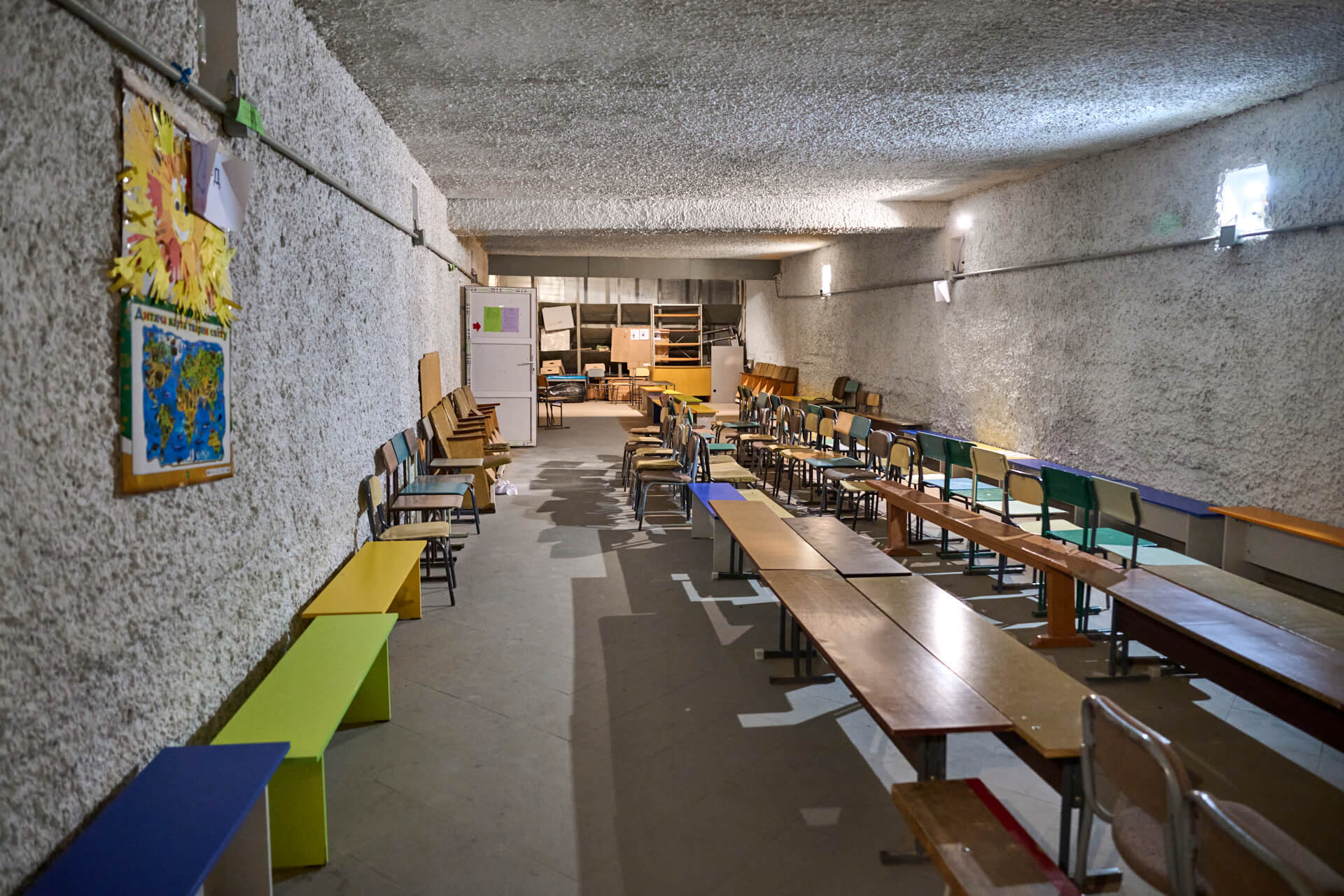
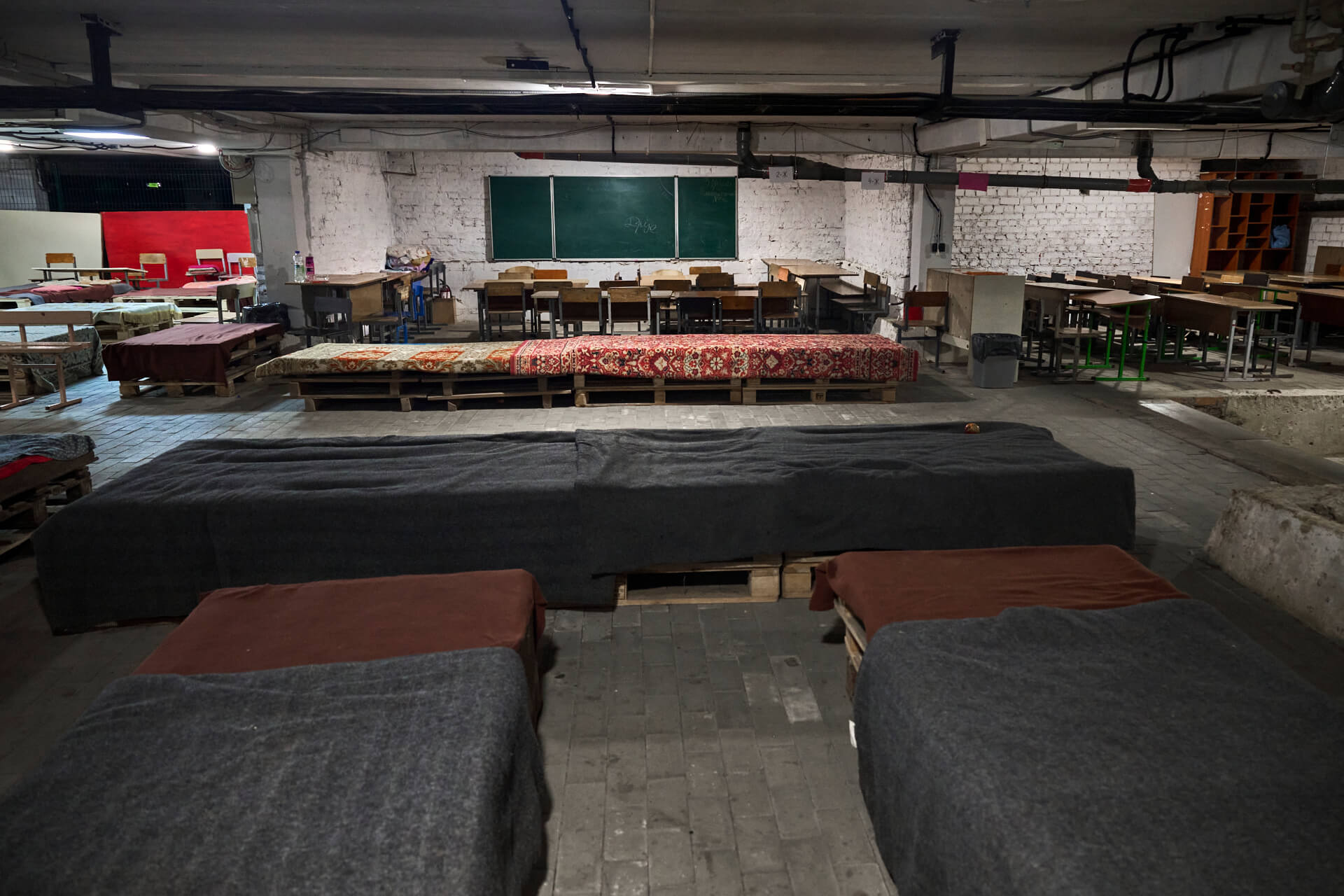
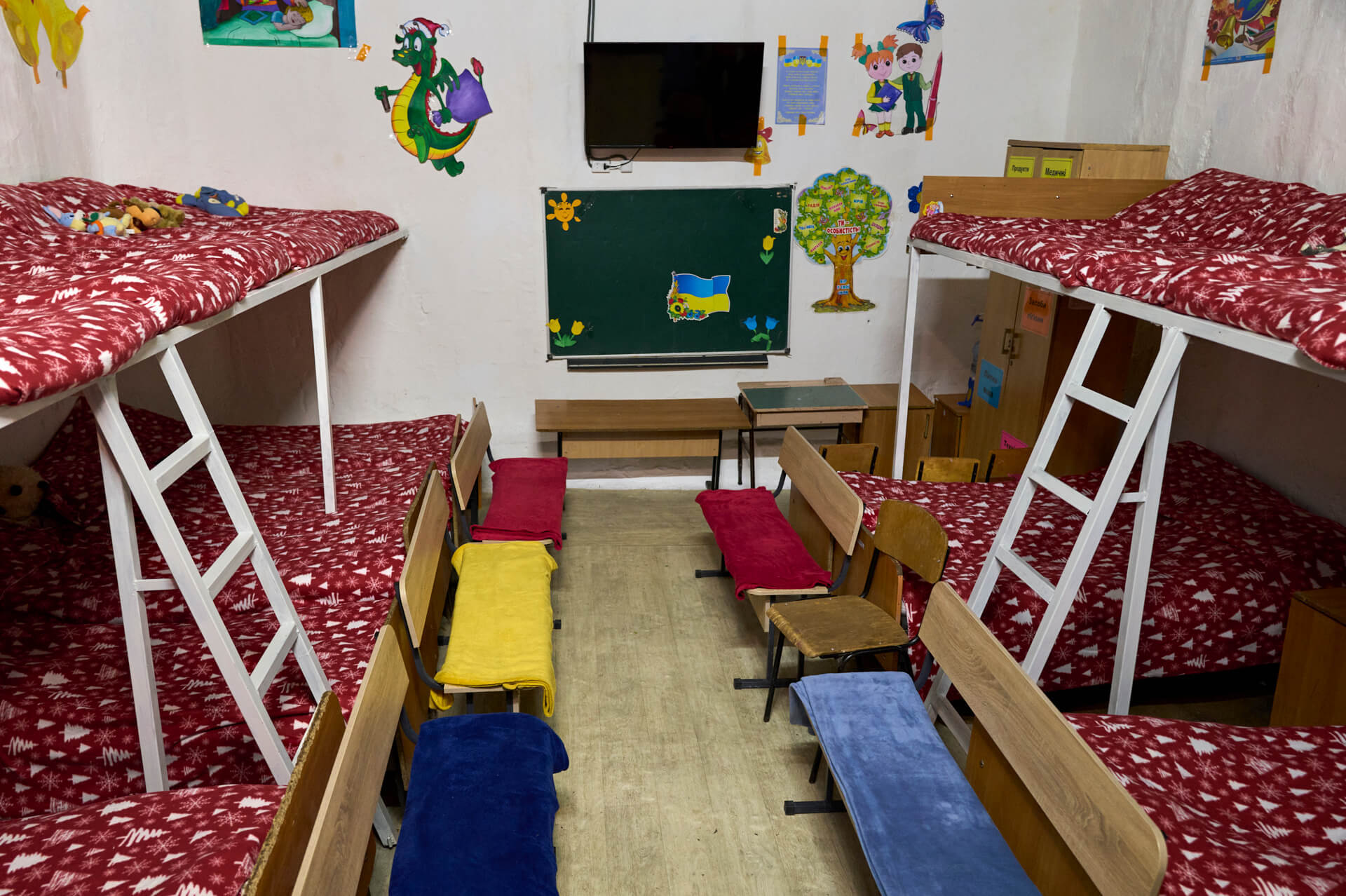
When it became clear that Russian attacks were targeting civilians and civilian infrastructure, in the summer of 2022 the Ukrainian government decided that returning to in-person learning would only be permitted in facilities equipped with proper shelter spaces. Requirements for their setup were developed by the State Emergency Service of Ukraine, and the Ministry of Education incorporated them into the guidelines for the new school year.
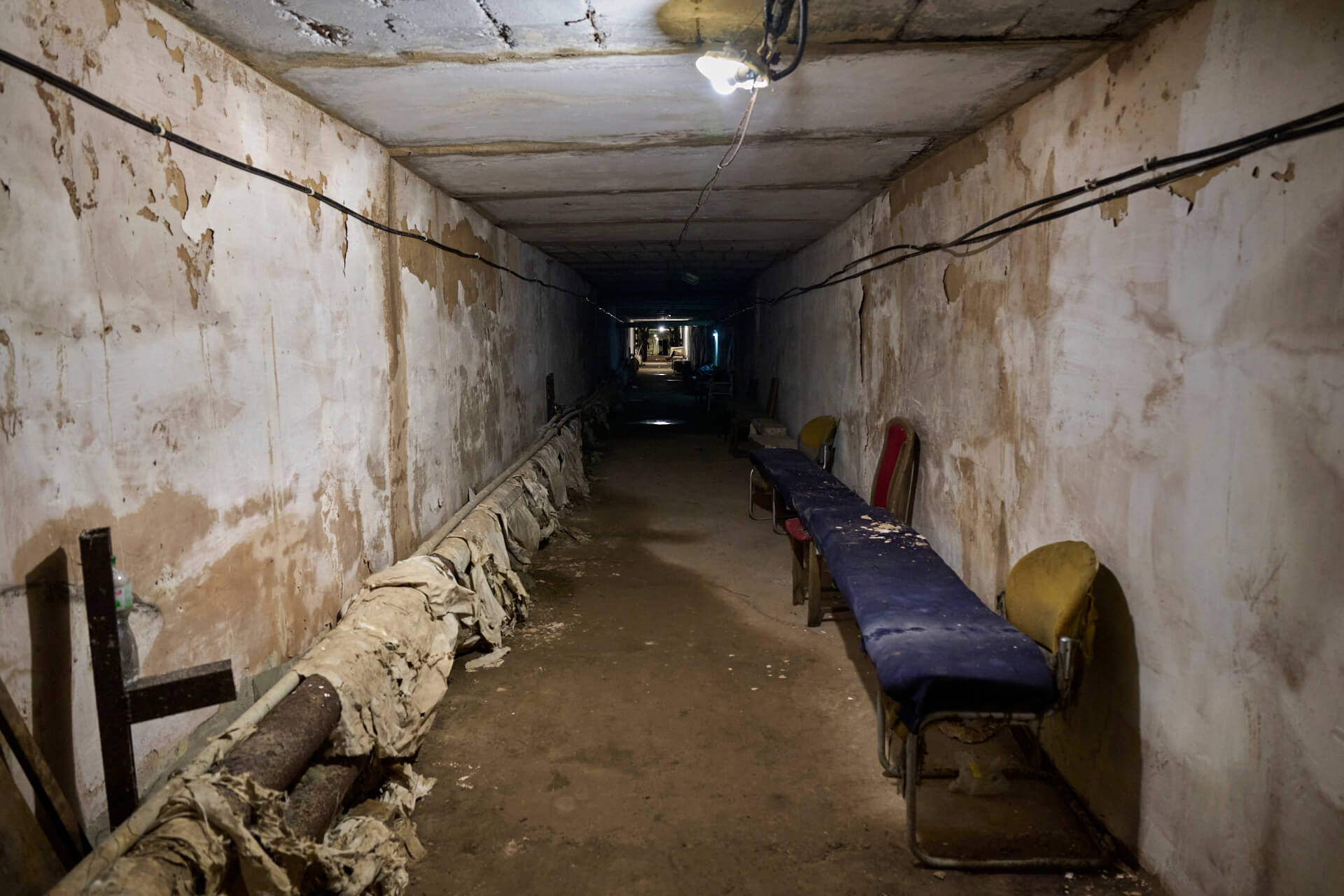
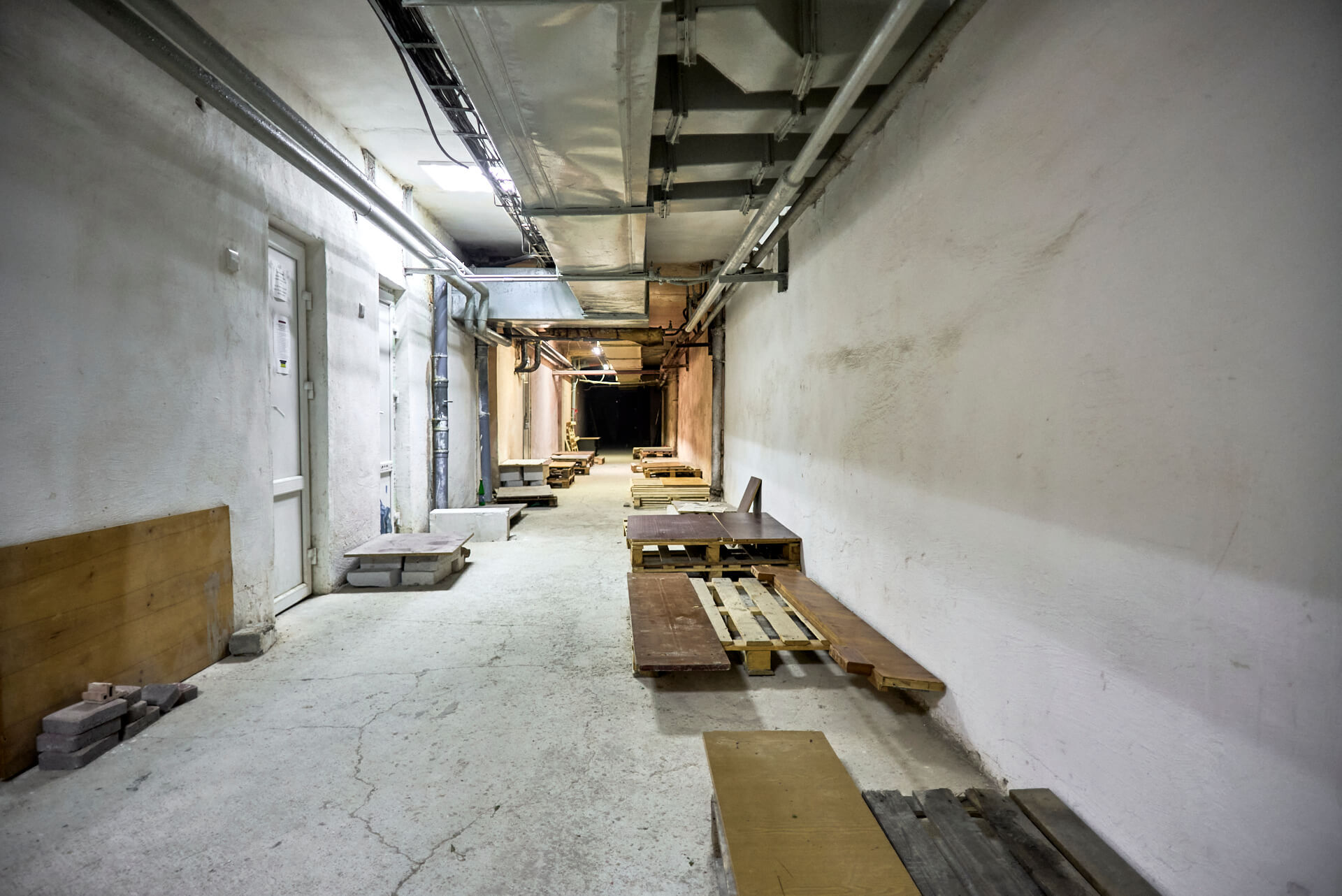
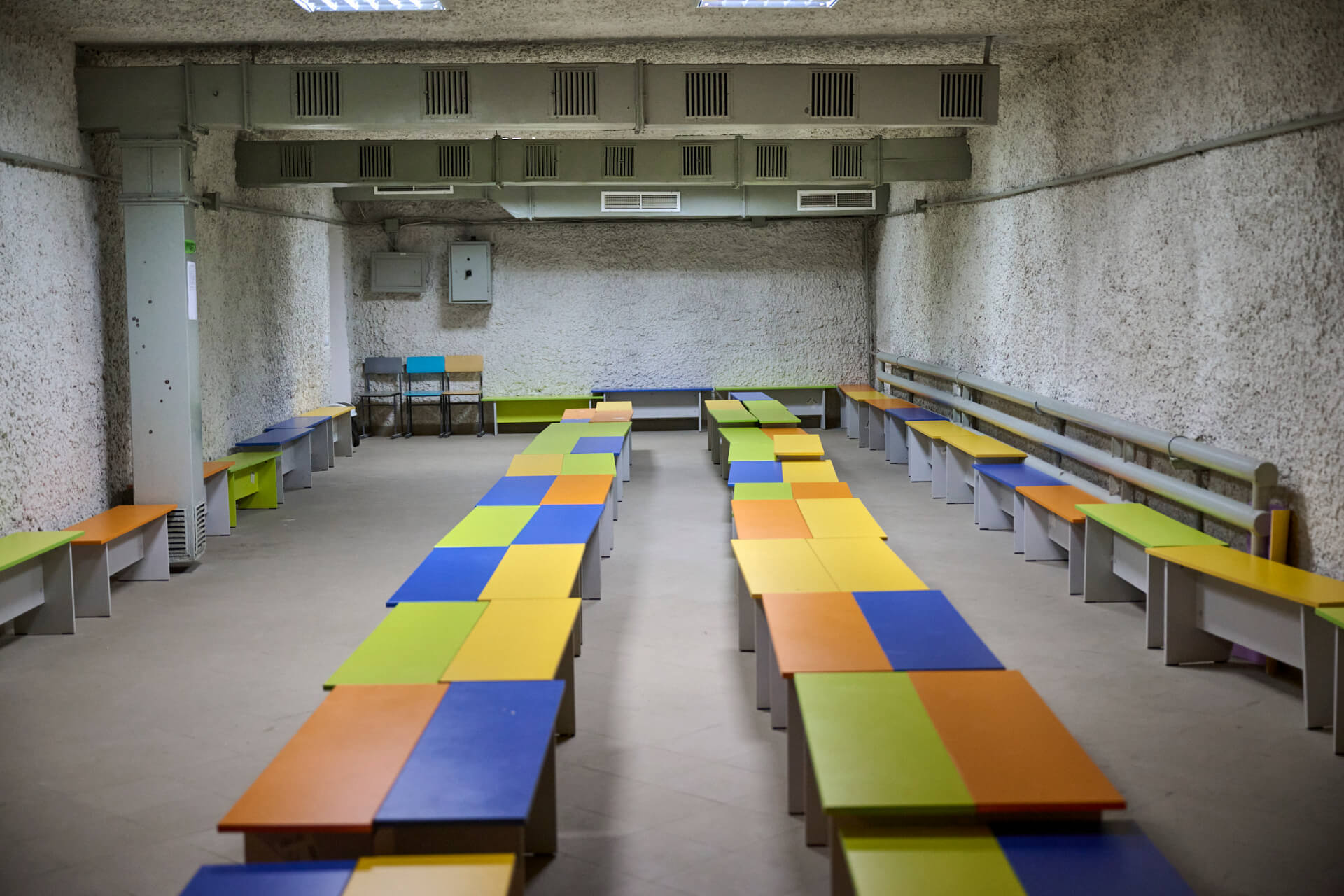
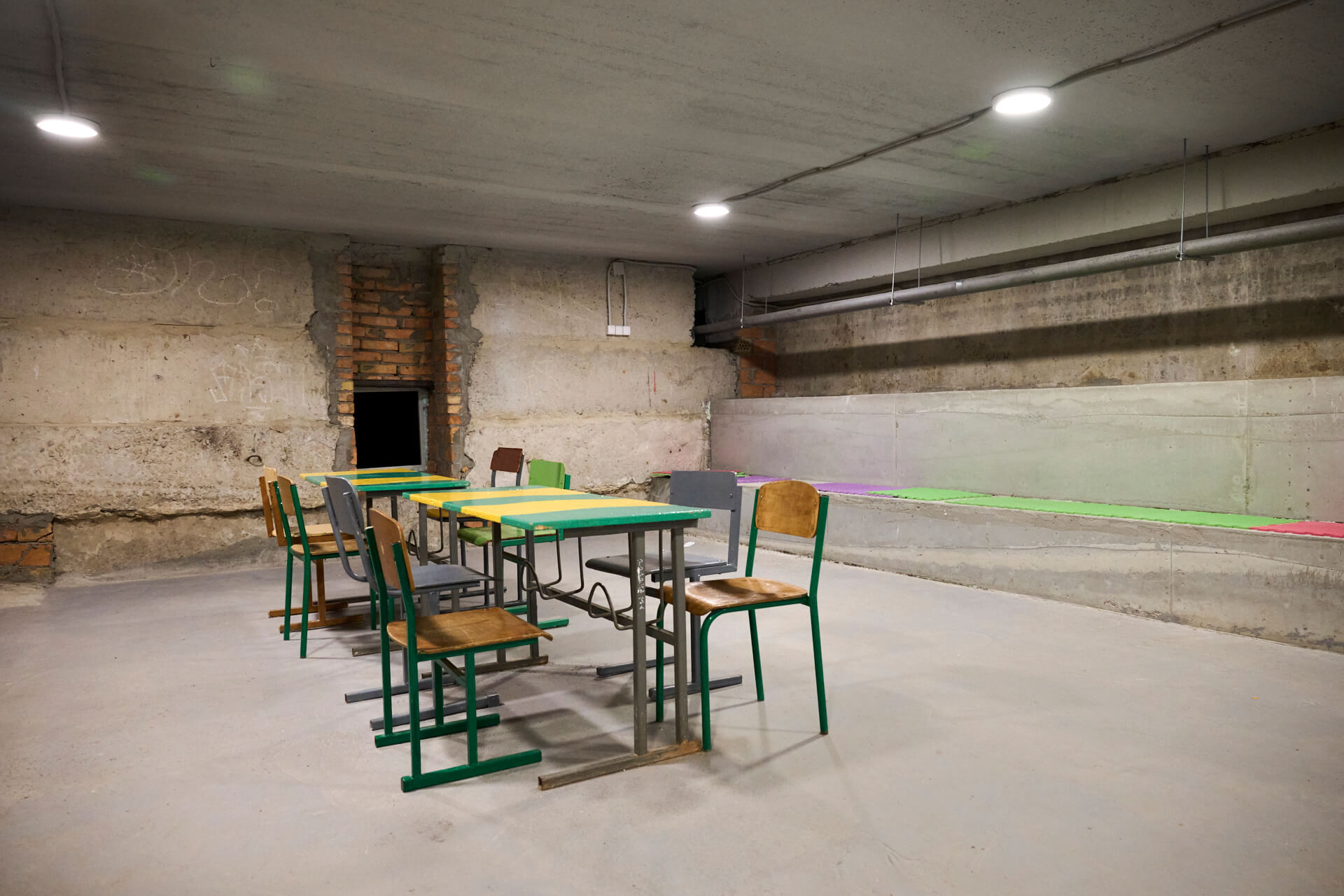
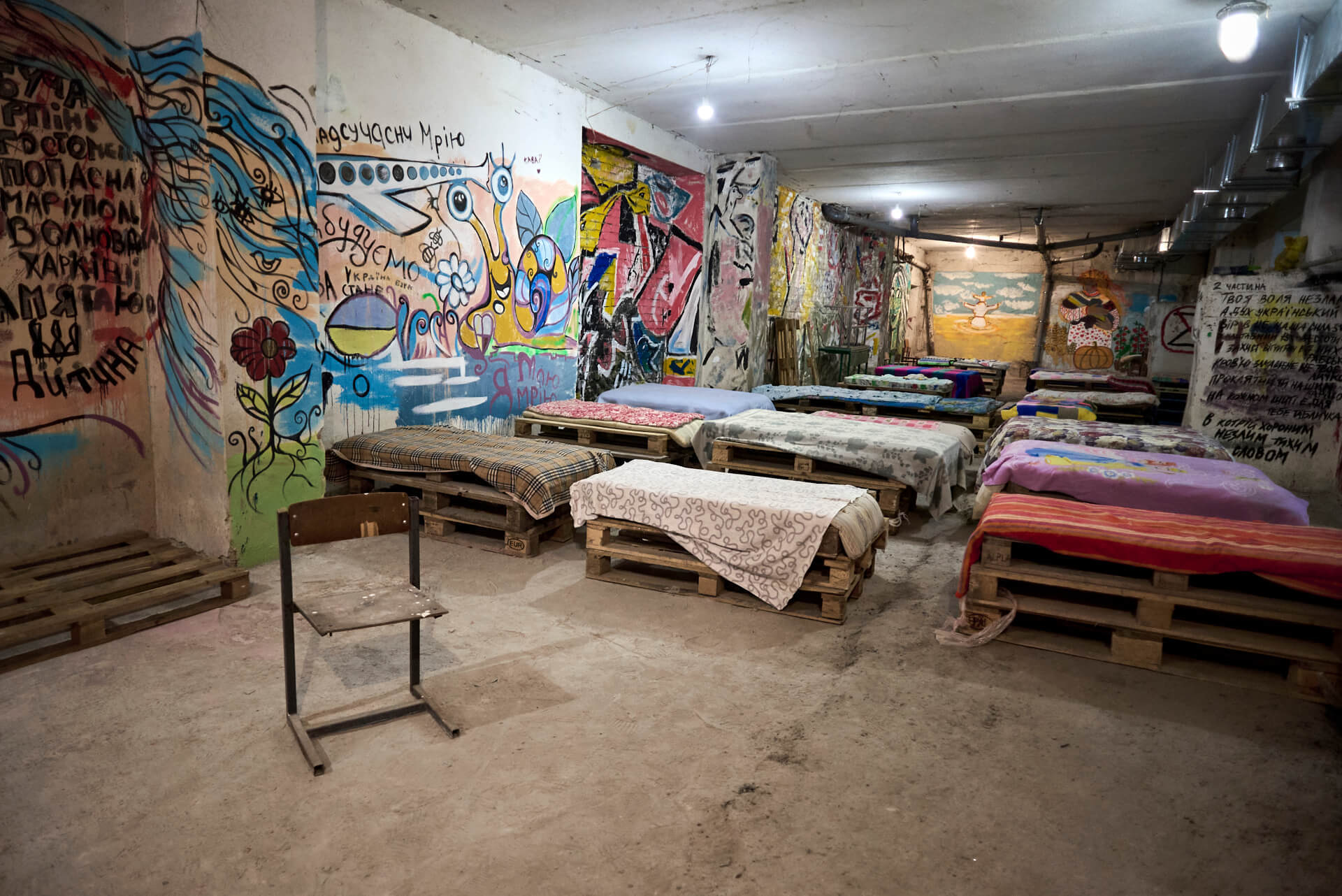
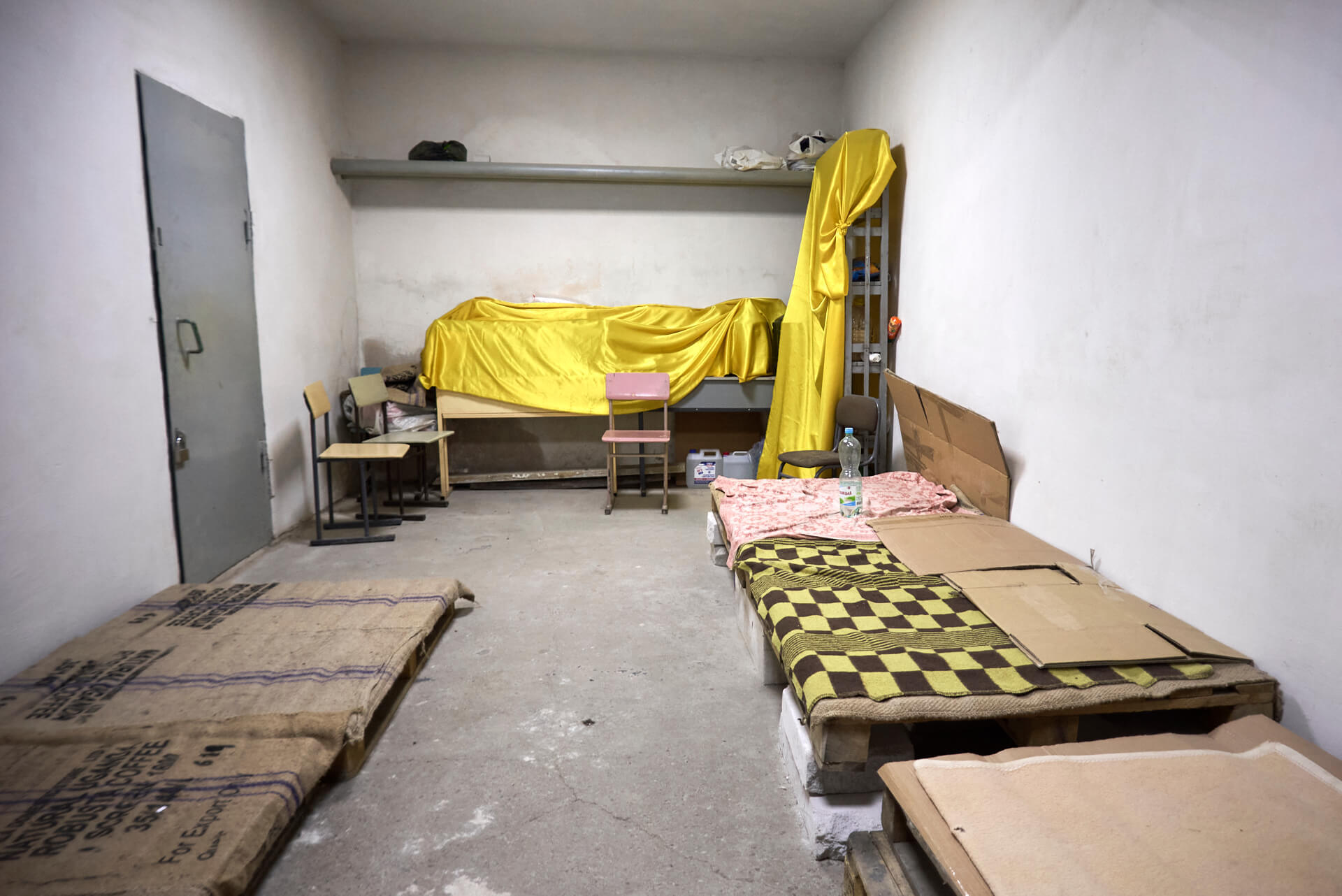
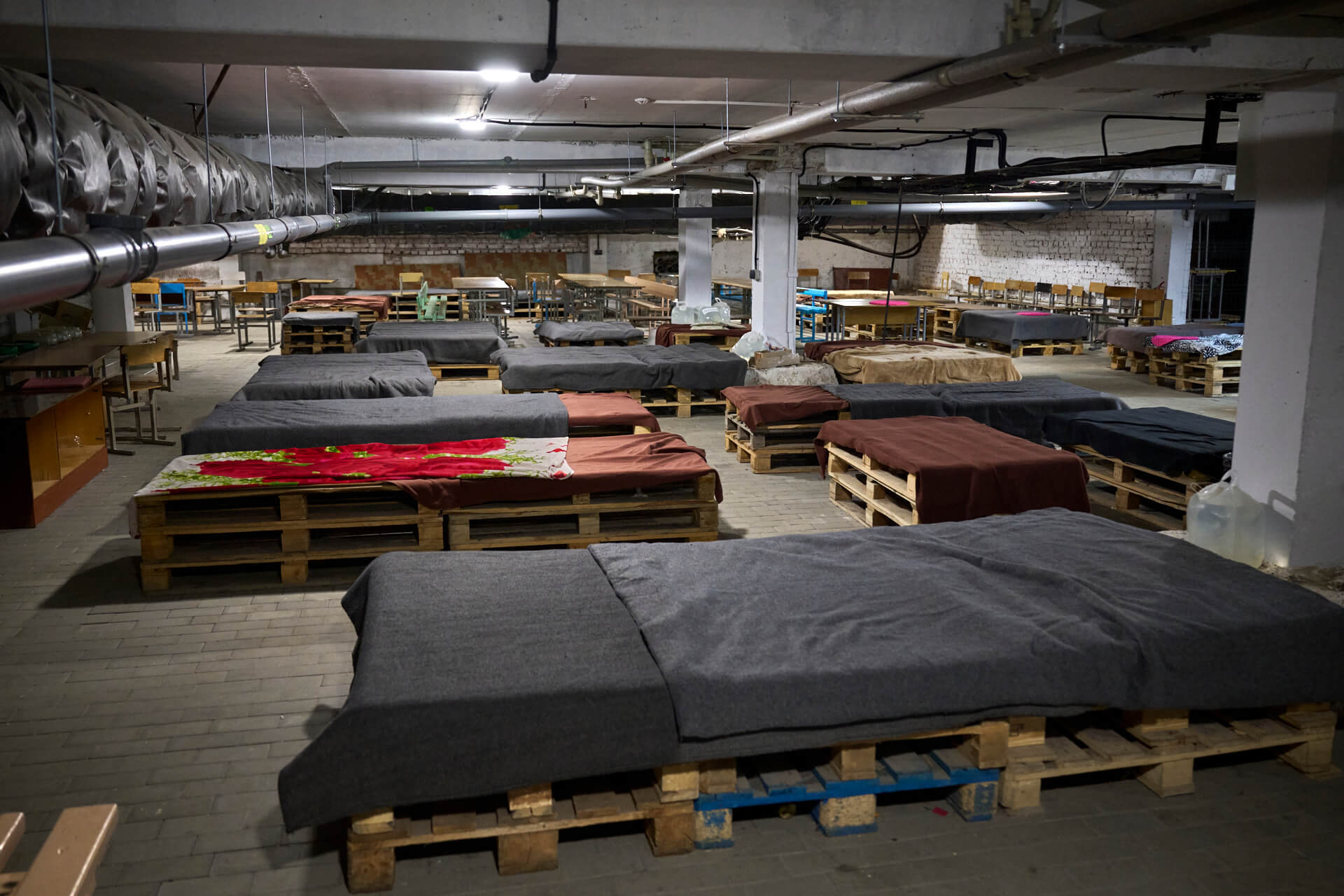
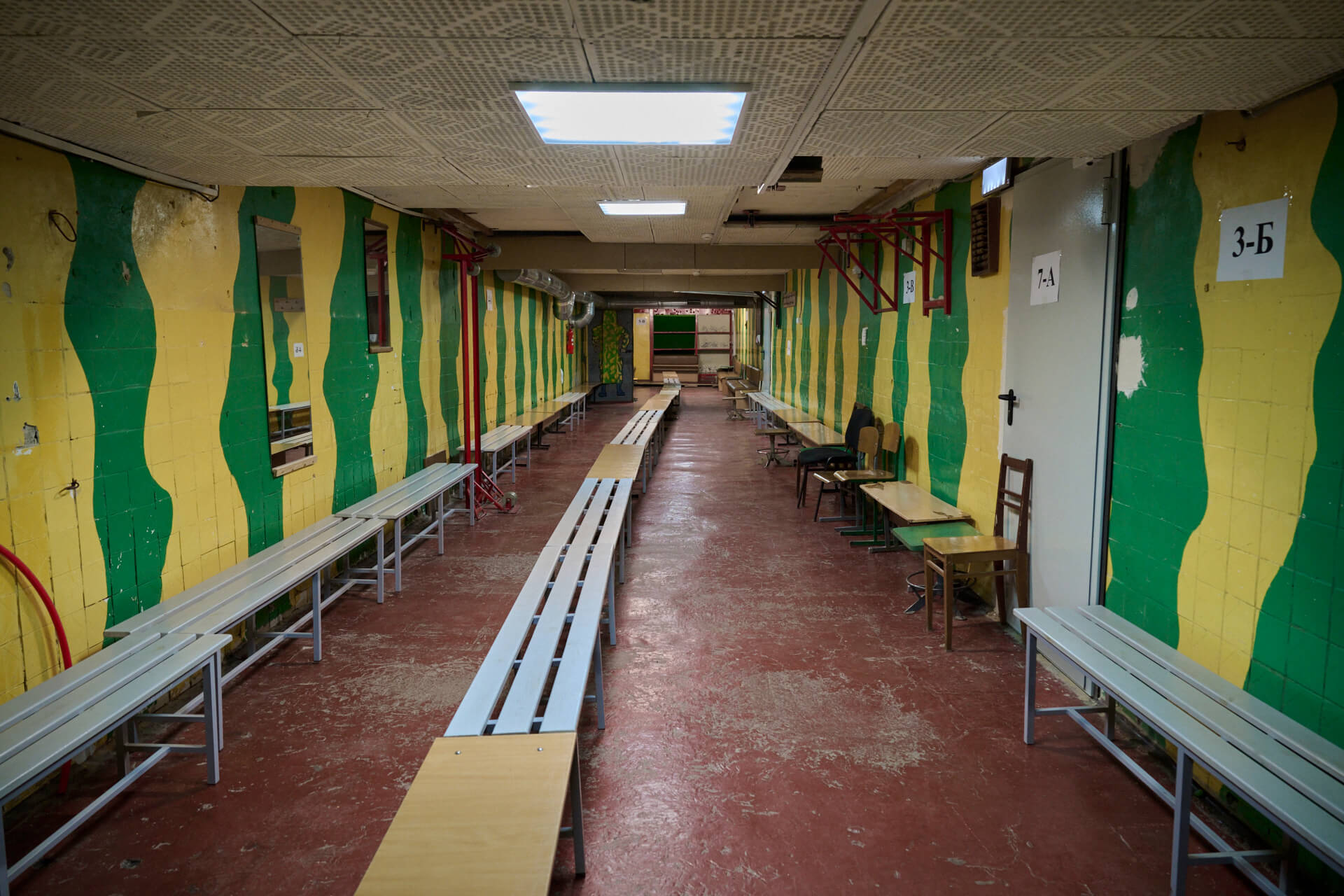
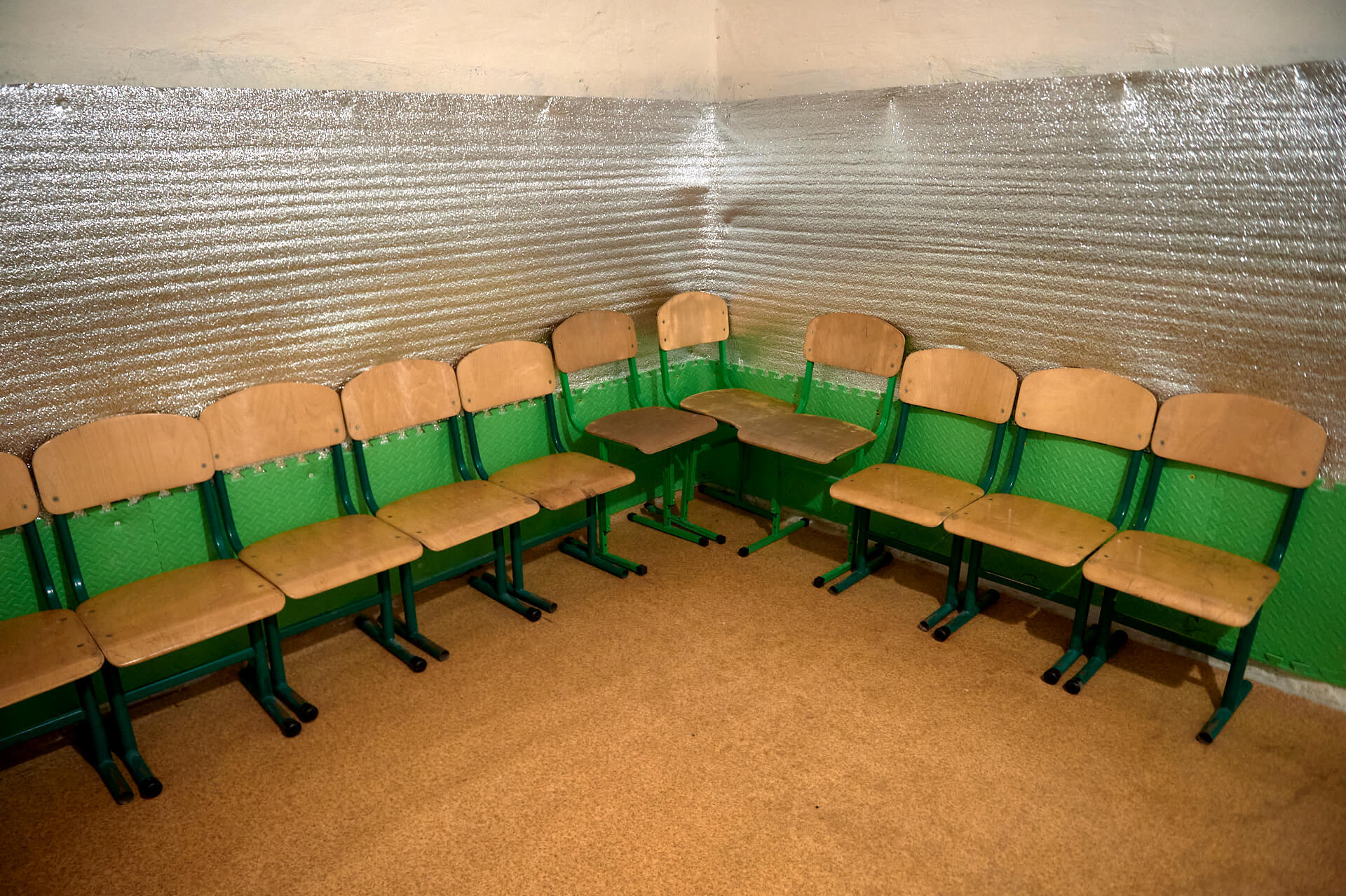
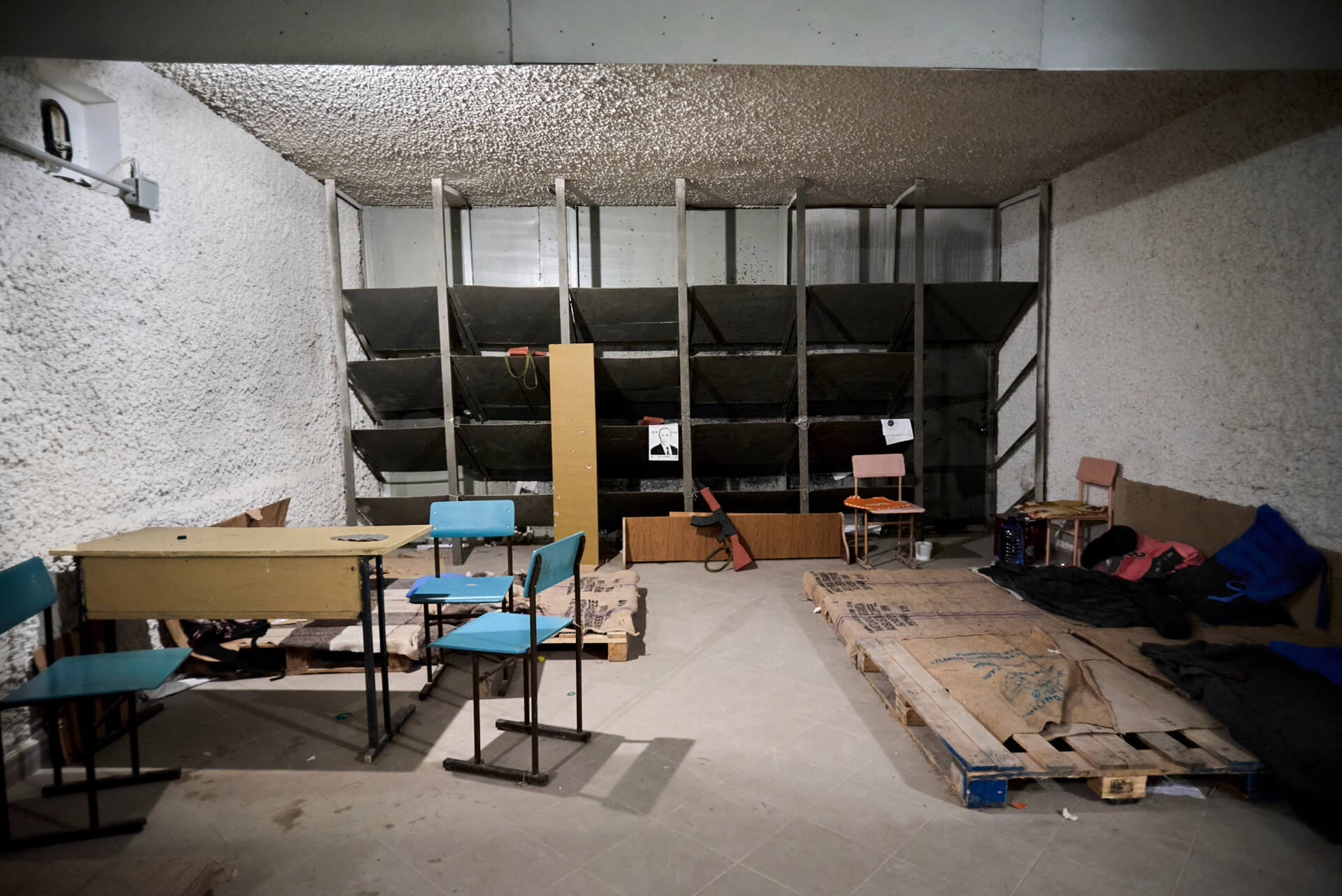
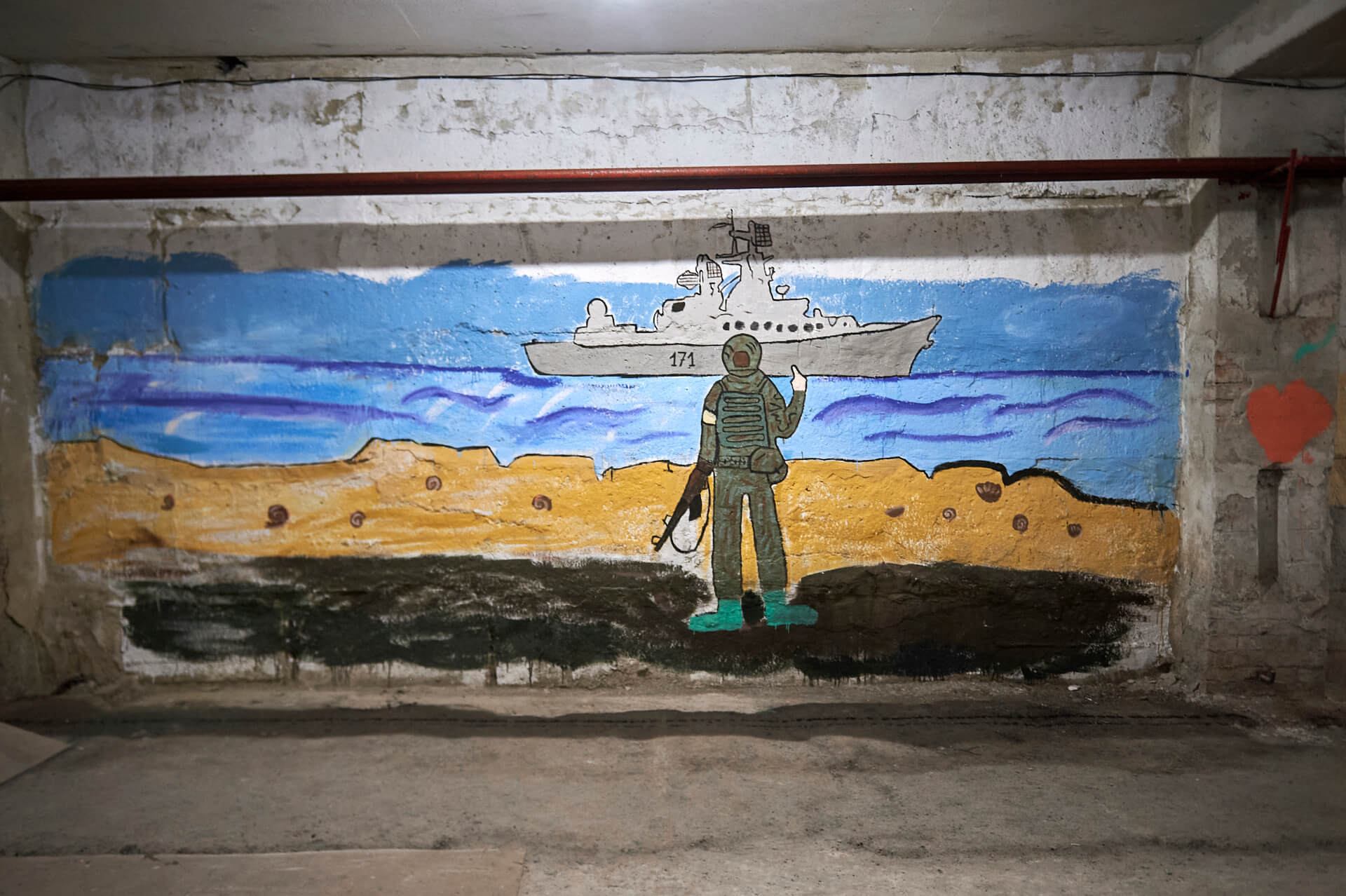
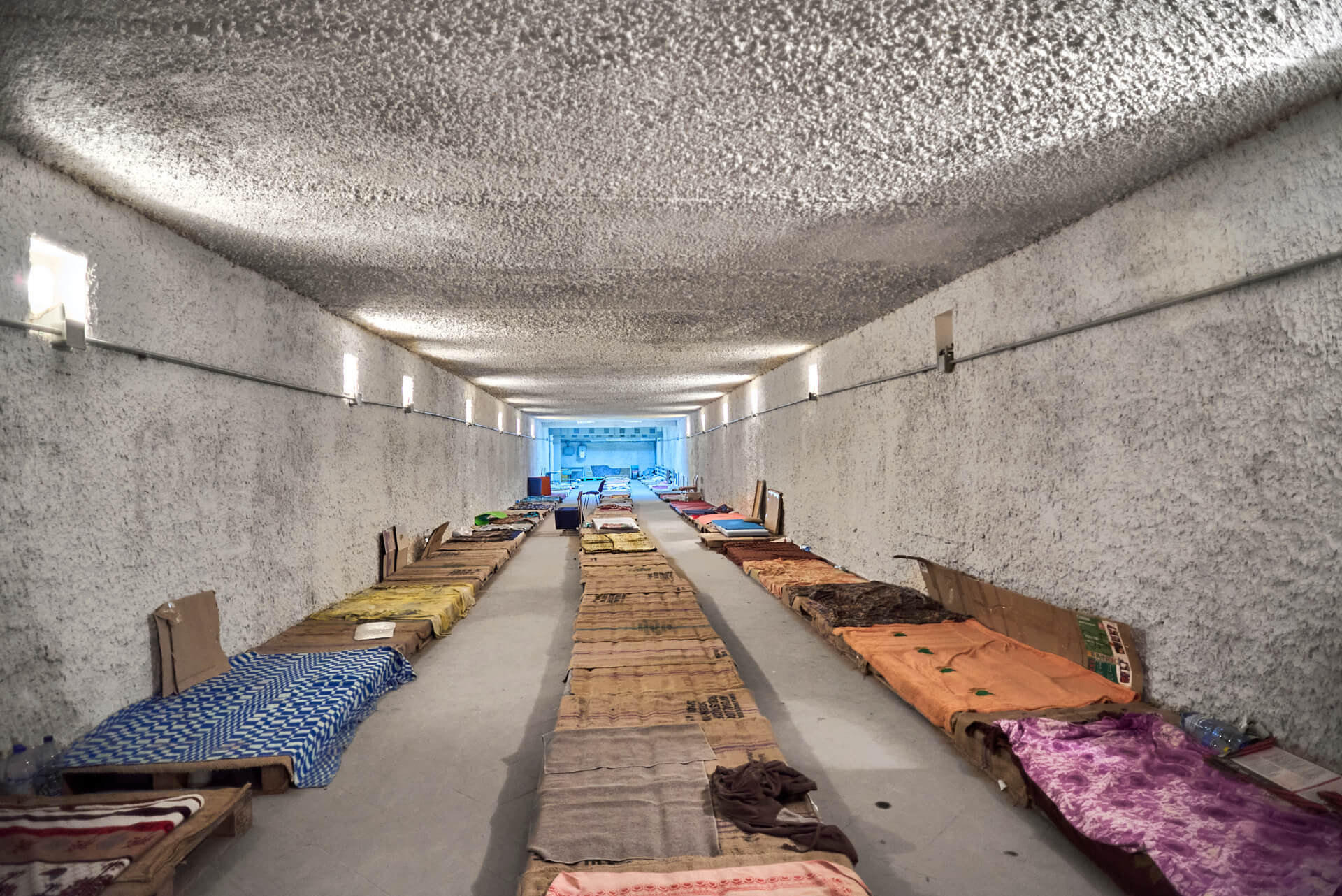
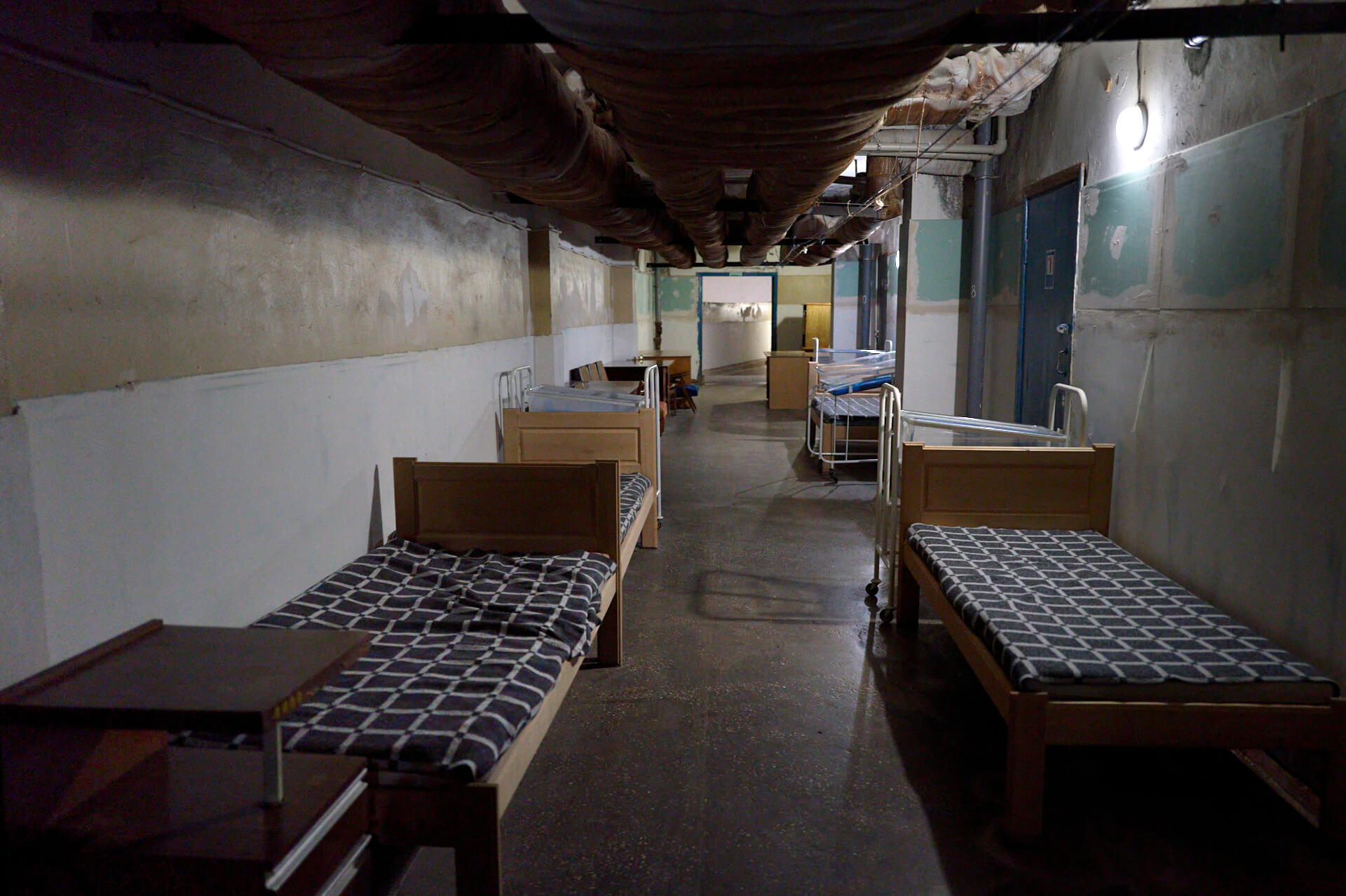
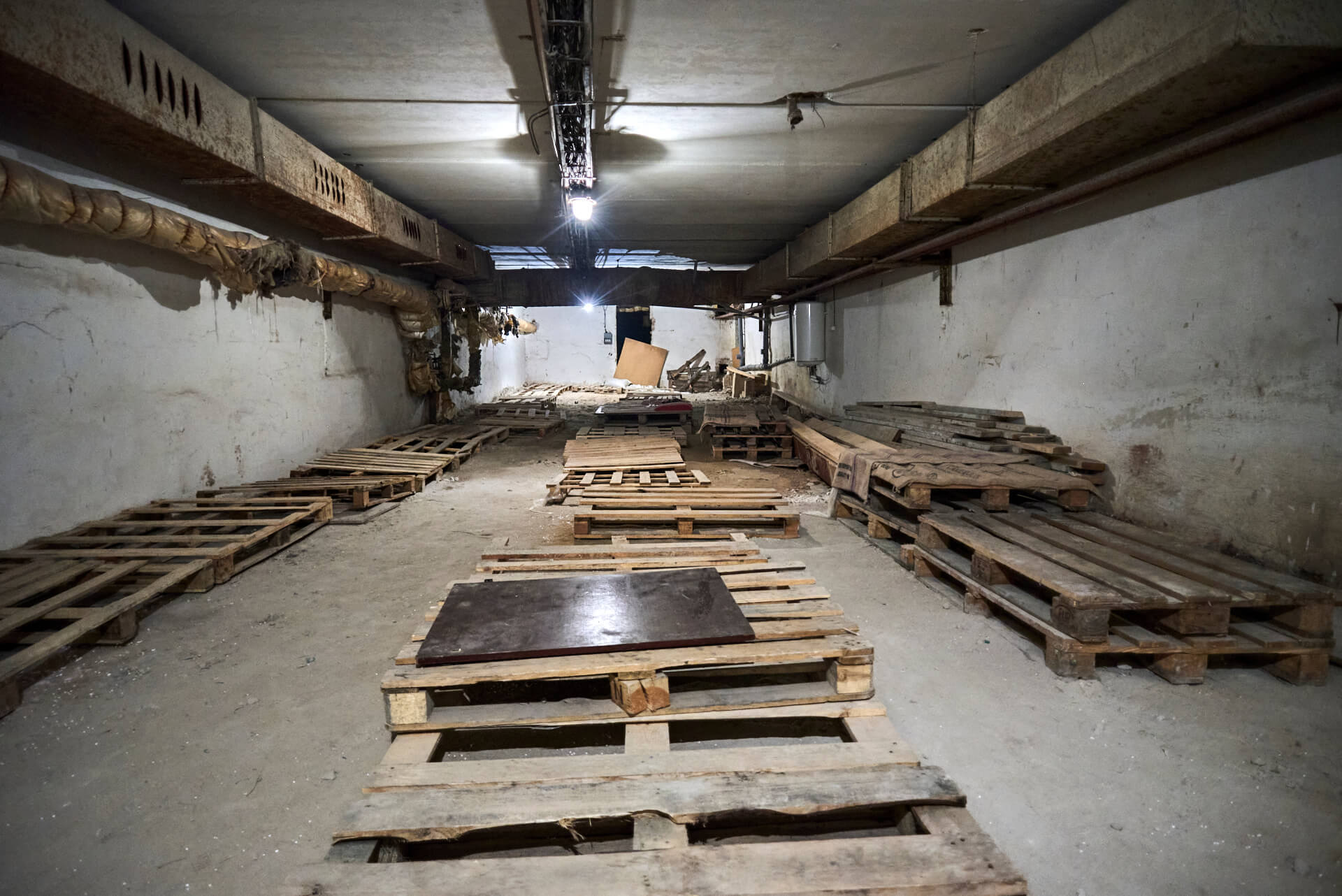
In most of the country, shelters are still improvised, dark basements. People began bringing in wooden pallets—covered with cardboard, mattresses, and blankets—as well as desks and hundreds of chairs gathered from everywhere. Sharp elements protruding from ceilings and walls were covered with tennis balls, portable toilets were set up, and graffiti appeared on raw concrete—painted partly to pass the time and partly out of a need to make these basement corridors, now turned into classrooms and daycare rooms, feel more like home.
Reports by Save the Children indicate that during the first four years of the full-scale war, the average cumulative duration of air raid sirens in Ukraine reached around 4,000 hours—the equivalent of over 5.5 months of non-stop wailing sirens. In frontline areas and the Kyiv region, this figure is nearly twice as high: 7,000 hours. That amounts to 9.5 months—nearly a full year spent in school basements.
Regulations often force difficult compromises, as seen in the special needs school in Hlynsk, Sumy Oblast—a residential facility for children with disabilities. While 88 children live and study at the school daily, the "certified" bunker set up in an earth dugout in the school garden can accommodate only 53 people. As a result, the facility must operate on a rotational basis: children spend two weeks at school and the next two weeks at home.
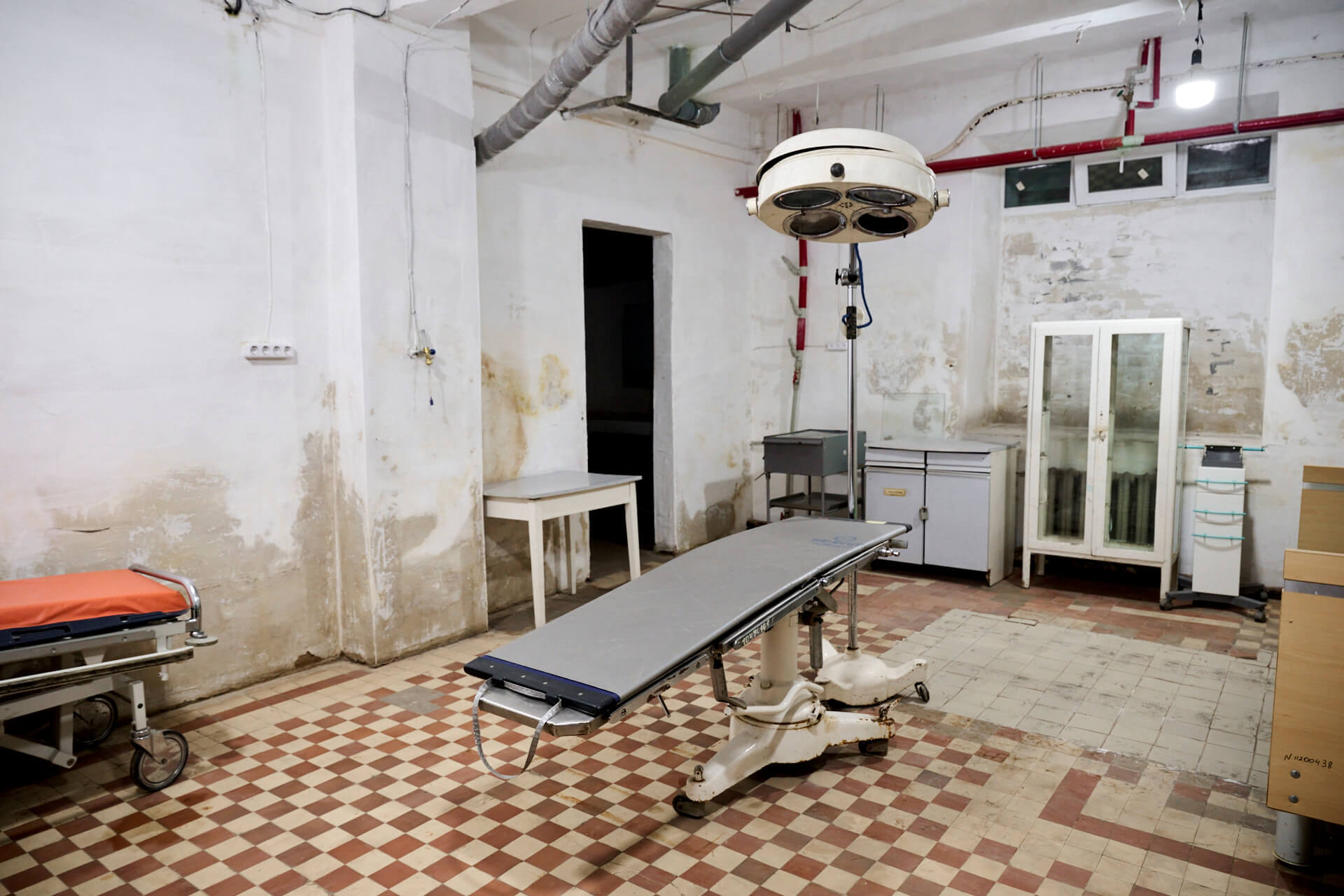
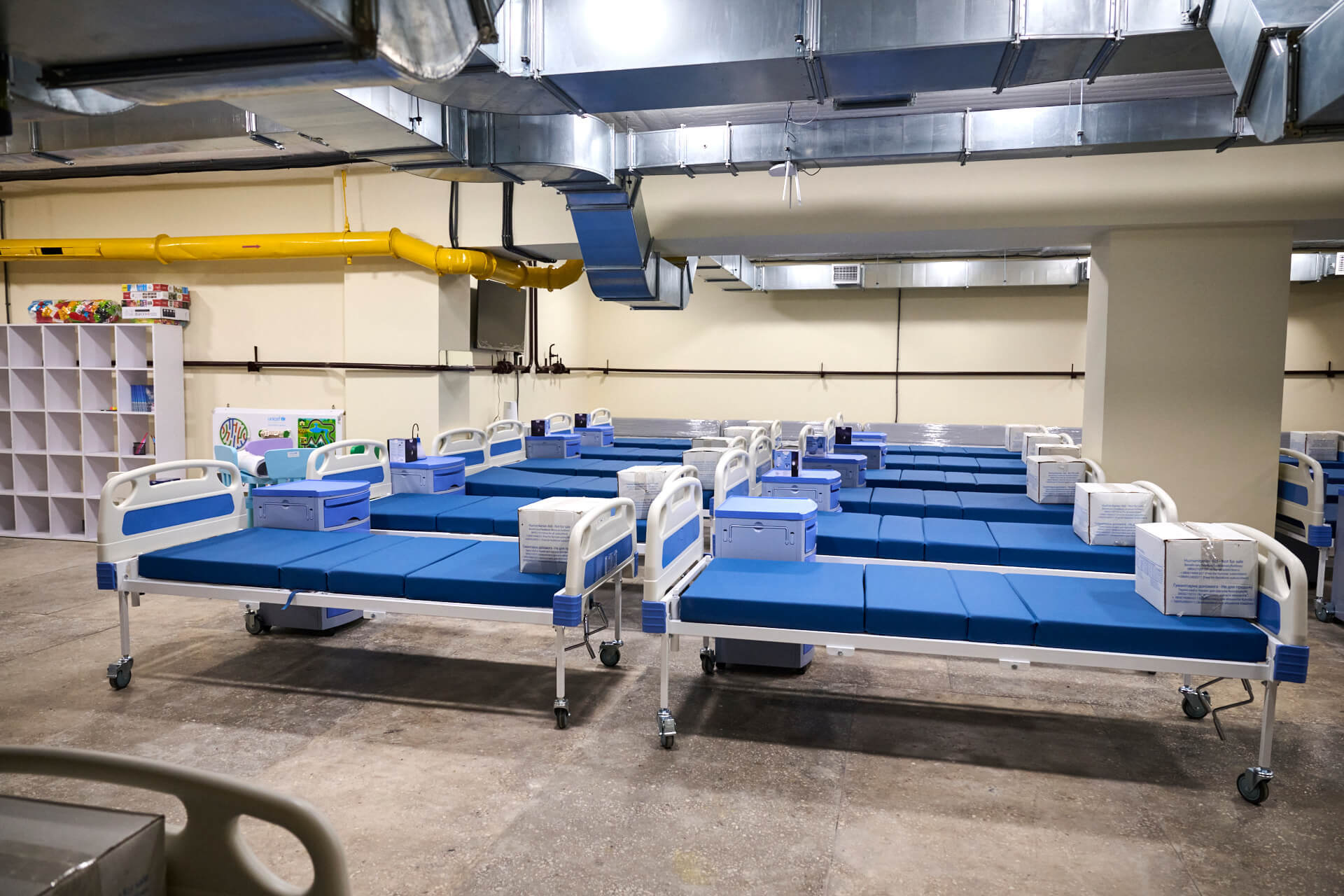
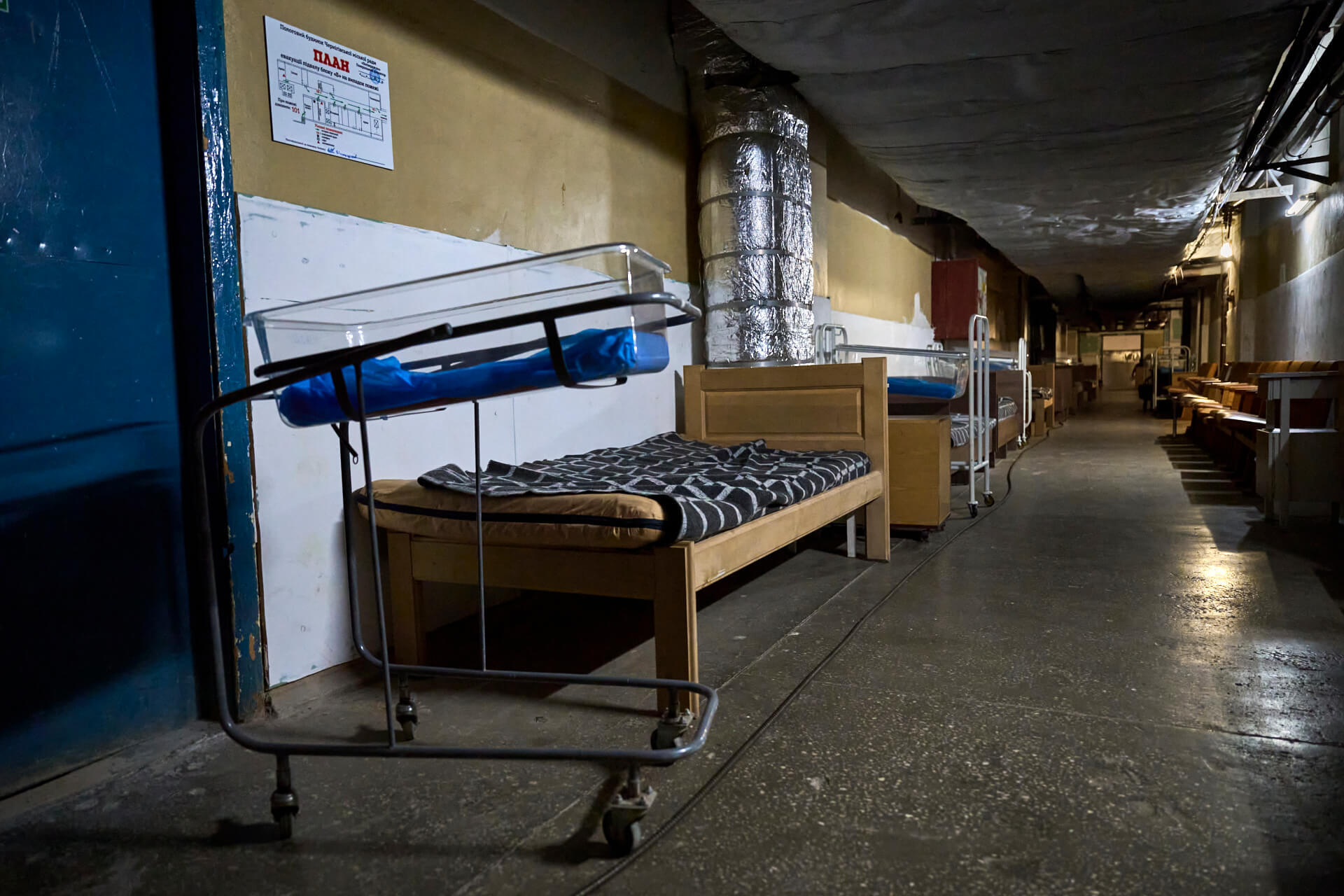
However, the protection system is not limited to schools. Shelters are also organized in hospitals for patients and staff who cannot be quickly evacuated. Since November 2023, Ukrainian building codes have required facilities established there to allow for continuous medical treatment. Operating rooms, delivery rooms, ICUs, and laboratories are being set up in hospital basements. The underground space ceases to be merely a hideout—it becomes a fully functioning medical facility.
Photographs taken while accompanying humanitarian missions of Smartaid.
I photograph this shared, underground everyday life. Places created simply to wait out the sirens.
“A Place to Hide” is also a book printed on polypropylene sacks — exactly the kind that are filled with sand to protect buildings from shrapnel.